Preface
Artificial intelligence has become one of the most rapidly adopted technologies in history. Every week brings another breakthrough, another product announcement, another bold prediction about how AI will reshape industries. Boards are asking difficult questions, executive teams are under pressure to not only define their AI strategy but to produce results, and organizations everywhere are racing to launch pilots in the hope of finding the next competitive advantage.
Yet despite all of this activity, one observation kept coming back to both of us.
The technology is moving much faster than most organizations know how to absorb it.
Over the past several years, we have had the opportunity to work with organizations approaching AI from very different perspectives. One of us has spent decades helping executives think about business strategy, leadership, and organizational transformation. The other has been responsible for deploying AI capabilities inside one of the world’s largest enterprises, experiencing firsthand the opportunities, the excitement, and the practical realities of taking AI from experimentation into operational production. Throughout the book, passages marked Practitioner Perspective are told in that practitioner’s first-person voice, drawn from the inside of that journey. Although our experiences were different, we repeatedly arrived at the same conclusion. Organizations rarely struggle because AI is incapable. They struggle because the enterprise itself is not yet prepared to absorb and apply AI effectively.
That realization became the foundation and the challenge for this book.
There is no shortage of books explaining how artificial intelligence works, comparing language models, teaching prompt engineering, or predicting what AI may become in the future. Those are valuable topics, but they are not the questions we found executives asking. Leadership teams wanted to understand something far more practical. How do you introduce AI into a business without creating chaos? How do you redesign workflows without disrupting operations? How do you establish governance without slowing innovation? How do you prepare people for a different way of thinking and working? Above all, how do you move beyond isolated pilots and create measurable business value at enterprise scale?
Those questions have little to do with selecting the “best” model. They have everything to do with how an organization operates and improves with AI.
AI does not simply change technology. It changes the nature and economics of work.
That distinction matters. Throughout this book, we intentionally spend very little time debating which language model performs best on a benchmark or which vendor currently leads the market. Those technologies will continue to evolve long after this book is published. The principles that determine whether organizations succeed with AI are likely to endure much longer. Leadership, strategy, governance, operating models, workflow design, organizational change, trust, and implementation discipline remain relevant regardless of which model is leading this month’s rankings.
Our objective is therefore not to teach AI as a technology. It is to help leaders build organizations that are capable of creating value from AI, consistently and responsibly. We believe the enterprises that succeed over the next decade will not be those with access to the most advanced models. They will be the organizations that learn how to redesign themselves so that intelligence becomes part of the way they operate every day.
We hope this book helps your organization become one of them.
Introduction
The Enterprise Was Never Built for AI
Most organizations believe they have an AI strategy problem.
In reality, they have an enterprise transformation problem.
For decades, successful companies were built around principles that made perfect sense for the world in which they operated. They created specialized departments, established governance layers, introduced approval processes, optimized for consistency, and separated business functions from technology organizations. These operating models produced stability, reduced risk, and allowed companies to scale across countries, markets, and products. They helped create many of the world’s most successful enterprises.
Artificial intelligence changes many of those assumptions.
Unlike previous waves of technology, AI does not simply automate existing processes or digitize information. It introduces intelligence into work that previously depended almost entirely on human judgment. Decisions that once required hours can now happen in seconds. Knowledge that was buried across documents, systems, and people can be assembled almost instantly. Entire workflows can be redesigned because the cost, speed, and availability of intelligence have changed.
The challenge is not whether AI is ready for the enterprise. The challenge is whether the enterprise is ready for AI.
That distinction sits at the heart of this book.
Over the past two years, organizations around the world have invested billions of dollars in artificial intelligence. Every major technology company now offers AI capabilities. Nearly every board agenda includes discussions about AI. Most executive teams have launched pilots, innovation programs, or centers of excellence. Yet when you look beyond the announcements, a different picture begins to emerge. Many organizations have successfully demonstrated AI. Far fewer have fundamentally changed the way they operate because of it.
The difference between those two outcomes is enormous.
Deploying AI is relatively straightforward. Building an organization capable of using AI consistently, responsibly, and at scale is profoundly more difficult. Technology alone does not create transformation. Organizations create transformation by changing how decisions are made, how work flows across functions, how people collaborate, how governance evolves, and how accountability is shared between humans and intelligent systems.
The most persistent misconception about AI is that success depends on choosing the right technology. It does not. The organizations creating the greatest value are rarely distinguished by access to a better model or a more sophisticated platform. They distinguish themselves by re-thinking and redesigning how work gets done. They rethink workflows before automating them. They rethink governance before scaling AI. They rethink leadership before expecting people to embrace new ways of working. In other words, they transform the enterprise before expecting the technology to transform the business.
This book explores that transformation from multiple perspectives. We examine why so many AI initiatives stall after successful pilots, why workflows matter more than isolated use cases, why operating models must evolve, how governance can enable rather than inhibit innovation, how organizations should think about implementation at scale, and why people remain at the center of every successful AI transformation. Along the way, we share practical lessons drawn from enterprise experience, not simply from theory or market observation.
The organizations that thrive in the AI era will not be those that simply deploy more AI. They will be the ones that redesign themselves to use intelligence differently.
That is a much larger challenge than selecting software or implementing another technology platform. It requires leaders to rethink long-standing assumptions about work itself, business and technology organizations to collaborate differently, and governance that keeps pace with innovation without sacrificing trust. Above all, it requires organizations to recognize that AI is not another technology project. It is an enterprise capability that touches strategy, operations, leadership, people, culture, and the operating model of the business.
The chapters that follow are intended to help leaders navigate that journey. Some chapters challenge conventional thinking. Others provide practical frameworks for implementation. Collectively, they build a pragmatic roadmap for organizations that want to move beyond AI experimentation and create lasting business value.
Because success in the AI era will belong less to organizations that deploy the most artificial intelligence and more to those that become the most capable of absorbing it.
CHAPTER 1
Why Do Enterprise AI Deployments Stall?
v
AI is ready for deployment long beforemost enterprises are ready to absorb it.
Artificial intelligence has advanced faster than almost anyone expected. Capabilities that once seemed years away are now part of everyday business. Organizations are launching copilots, funding AI initiatives, experimenting with generative AI, and announcing ambitious transformation programs. Every board agenda includes AI, vendors promise revolutionary gains, and executives face growing pressure to define how AI will reshape their business. Yet beneath the excitement lies an uncomfortable reality.
Despite millions of dollars in investment and thousands of successful demonstrations, relatively few organizations have translated AI into meaningful, enterprise-wide business value. Pilots remain isolated. Promising use cases fail to scale. Employees experiment enthusiastically while core business processes remain largely unchanged. AI has become easier to deploy, but much harder to operationalize.
AI is ready for deployment long before most enterprises are ready to absorb it.
That statement sits at the heart of this book because it changes how to think about the problem. Most organizations assume their biggest challenge is selecting the right model, managing token costs, or choosing the right platform, or identifying the next breakthrough use case. Those decisions certainly matter, but they are rarely the reason enterprise AI succeeds or fails. More often, the limiting factor is the organization itself. AI is advancing faster than enterprises can redesign their workflows, modernize their operating models, establish effective governance, prepare their people, and build the trust necessary to make AI part of everyday work.
Understanding that gap also forces us to rethink where AI actually creates business value. For many organizations, the conversation is still centered on models, pilots, and technology demonstrations. Those are important, but they are not where competitive advantage is created.
The real value of AI comes less from simply using it than from embedding it into the core operations of the business. AI will never achieve its full potential as long as it is treated as a fear-of-missing-out experiment, another isolated pilot, or a technology initiative sitting on the edge of the organization. It creates competitive advantage and outsized value when it changes how work flows across the enterprise, improves decision-making, and fundamentally alters the economics of a business process.
That idea is easy to say but much harder to achieve. If the technology is already capable of creating this kind of value, why are so many organizations still struggling to move beyond pilots and isolated successes? Why do so many AI initiatives lose momentum after an impressive demonstration? Why do organizations continue to invest heavily while relatively few can point to enterprise-wide transformation? The answer is consistent across industries and company sizes, and the evidence continues to point in the same direction.
The conversation around enterprise AI often becomes misleading because success stories tend to focus on the technology itself, the sophistication of the model, the latest product announcement, or the speed at which new capabilities are emerging. Failure, however, rarely originates in the model. It happens inside the enterprise.
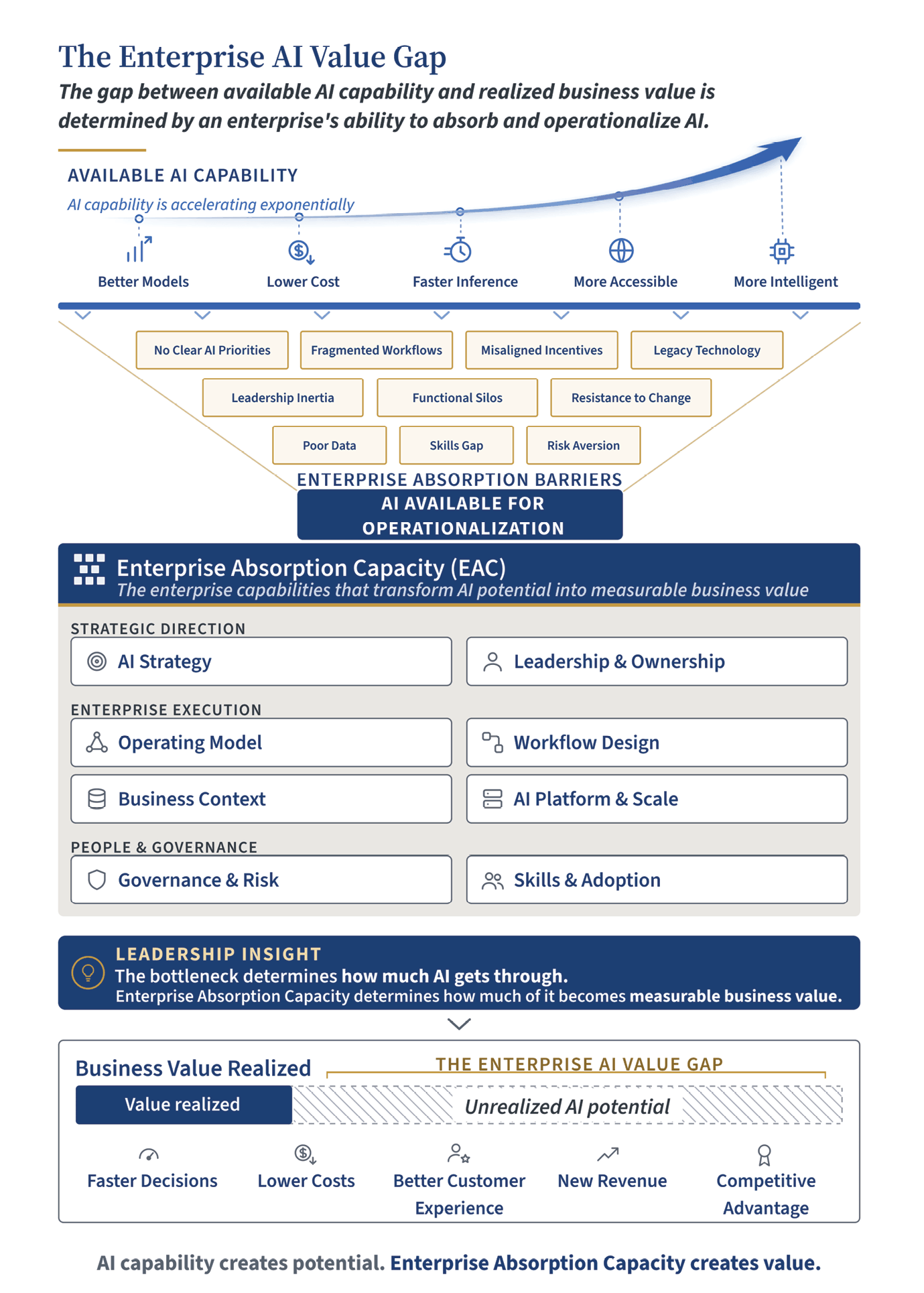
Figure 1.1 - The Enterprise AI Value Gap
Figure 1.1 illustrates the central thesis of this book. AI capability is no longer the primary constraint. The limiting factor is an organization’s ability to absorb, operationalize, and scale that capability across its workflows, operating model, governance, and people. This framework will return throughout the book, because every chapter is about increasing Enterprise Absorption Capacity.
The framework explains one of the biggest paradoxes in enterprise today. AI capability is improving at an extraordinary pace. Models are becoming more capable, more affordable, and more accessible with remarkable speed. Yet enterprise-wide business value continues to lag. This is not because organizations lack ambition. Executive interest in AI has never been higher, investment continues to accelerate, and nearly every major enterprise is experimenting with AI across multiple functions. The gap exists because deploying a powerful model is a fundamentally different goal from changing how an enterprise operates.
Evidence from across industries points to the same conclusion. Research from McKinsey, Teneo, and reporting from The Wall Street Journal consistently shows that while AI experimentation has become widespread, relatively few organizations have achieved enterprise-scale deployment or realized the business outcomes they originally expected. Companies are generating isolated successes, but transforming isolated successes into enterprise capabilities remains difficult.
The pattern is consistent. Organizations can build a proof of concept. They can demonstrate impressive AI capabilities. They can even automate individual tasks. What they struggle to do is redesign workflows, redefine ownership, establish governance, prepare their data, equip their workforce, and integrate AI into the operating model of the business. In other words, they struggle to increase their Enterprise Absorption Capacity.
This distinction changes the conversation completely. The question is no longer,
“How do we deploy AI?”
The more important question is,
“How do we build an organization capable of absorbing AI at scale?”
The companies that answer that question successfully will create lasting competitive advantage. Those that do not will continue to produce impressive demonstrations with limited business impact.
The organizations pulling ahead are redesigning how work gets done. AI creates outsized value when it changes the inherent economics of a workflow, not when it automates tasks within an unchanged one.
The difference between using AI and transforming a business with AI becomes much clearer when viewed through a real-world example.
AI Winning Example
A concrete example makes the point clearer. UK-based Greyparrot developed AI-driven video analyzers trained to recognize more distinctly and reliably many categories of recyclables under real-world conditions. AMP, a Colorado company building AI-enabled recycling facilities, has used the analyzer technology to show how AI can materially change difficult recycling industry process economics. Combined with pneumatic systems, the analyzers help sort large volumes of mixed categories of recyclable waste far more efficiently than is possible with older methods. The result is not simply an interesting AI use case. It represents a dramatic change in the economics of the entire recycling process: labor requirements fall, throughput rises, recovery rates improve, and downstream reusable material value increases when the system works end to end.
Broader enterprise-spanning landscapes are inherently more complicated. They include real successes, disappointing failures, inflated expectations, and growing frustration. Many companies feel they cannot afford not to invest in AI, yet many still lack a strategy they trust or an operating model that can support AI at scale. The reasons are not mysterious. Across industries, the same set of barriers appears again and again.
The Pilot Trap
Organizations keep proving that AI can work without changing the conditions required for AI to matter.
The pattern repeats itself across industries. Innovation teams build impressive prototypes. Business units experiment with promising use cases. Executives sponsor demonstrations that showcase the latest AI capabilities. The technology often performs exactly as expected, generating excitement and optimism about what comes next. Yet beneath all that activity, very little actually changes.
Core business processes remain largely untouched. Operating models continue to reflect yesterday’s ways of working. Decision rights are unclear, ownership becomes fragmented, and governance evolves more slowly than the technology itself. AI is added alongside existing work rather than becoming part of how the work is actually performed. The result is predictable. Organizations accumulate successful pilots but fail to build enterprise capability. Progress becomes fragmented, adoption remains inconsistent, business cases become harder to justify, and every new initiative feels like it is starting from the beginning. The organization appears innovative, but very little of that innovation compounds into lasting business transformation.
That realization extends well beyond any single company. It has become one of the defining characteristics of enterprise AI adoption across industries. Organizations are no longer competing simply on access to AI models. They are competing on their ability to operationalize AI faster, more effectively, and more consistently than their competitors.
This is why strategy, while essential, is never sufficient on its own. Strategy explains why AI matters and where it may be most valuable, but it does not build the organizational capability required to deploy AI successfully. A strategy that cannot be executed is not a strategy. AI strategy creates value only when it becomes embedded in the systems, workflows, decisions, and teams that create value every day.
That leads to a much more important question than simply “How do we deploy AI?”
So what does it actually mean for an enterprise to be “Built for AI?”
The answer is not a single technology, advanced AI model, a single leader, or a single decision. It is the combination of organizational strategy and capabilities that collectively determine an enterprise’s ability to absorb, operationalize, and scale AI. Those capabilities form what this book calls the Built For AI Framework
Chapter 1 continues in the complete book.